Astigmatism: Causes, Symptoms and How It Can Be Corrected
Astigmatism is one of the most common refractive errors seen in Singapore and frequently appears alongside myopia (short-sightedness) or hyperopia (long-sightedness). Despite its prevalence, the condition is often misunderstood, including by patients who have worn glasses or contact lenses to correct it for many years.
What Is Astigmatism?
Astigmatism is a refractive error caused by an irregularly shaped cornea (the clear front surface of the eye) or, less commonly, an irregularly shaped crystalline lens (the lens that sits behind the iris). Instead of curving evenly like a sphere, the surface curves more steeply in one direction than another.
This irregular curvature scatters light across multiple focal points rather than focusing it on a single point on the retina, which results in blurred or distorted vision at all distances.
Astigmatism is typically present from birth and may run in families. It can also develop or worsen due to eye injury, certain corneal conditions such as keratoconus (a progressive thinning and bulging of the cornea), or after eye surgery.
While mild astigmatism is common and may not always require correction, moderate to high astigmatism can affect daily activities and tends to benefit from intervention.
Common Symptoms of Astigmatism
Symptoms vary depending on the degree of astigmatism and may overlap with other refractive errors. Patients typically report:
- Blurred or distorted vision at all distances, not only near or far.
- Eye strain or discomfort, particularly after prolonged reading or screen use.
- Difficulty with vision at night, including halos or glare around lights.
- Squinting in an attempt to sharpen focus.
Besides adults, children with undiagnosed astigmatism may not notice that they have it. Parents or teachers may notice frequent squinting, head tilting, reduced interest in reading, or a tendency to sit very close to screens, which can be signs to check for astigmatism.
How Astigmatism Is Diagnosed
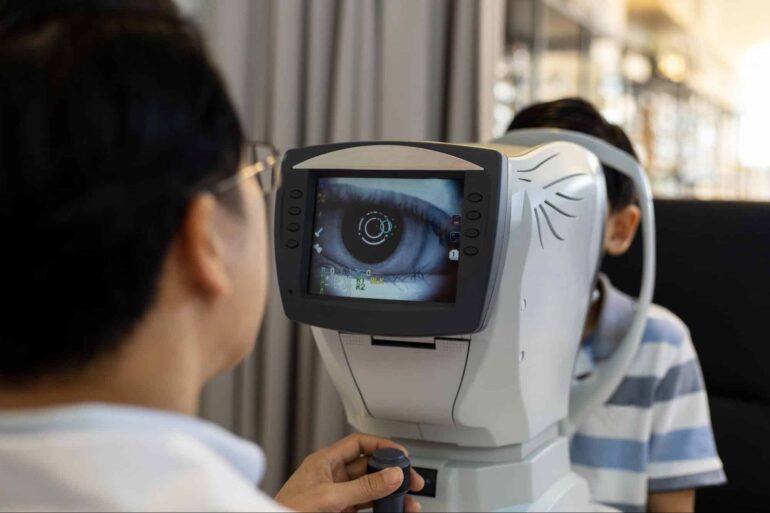
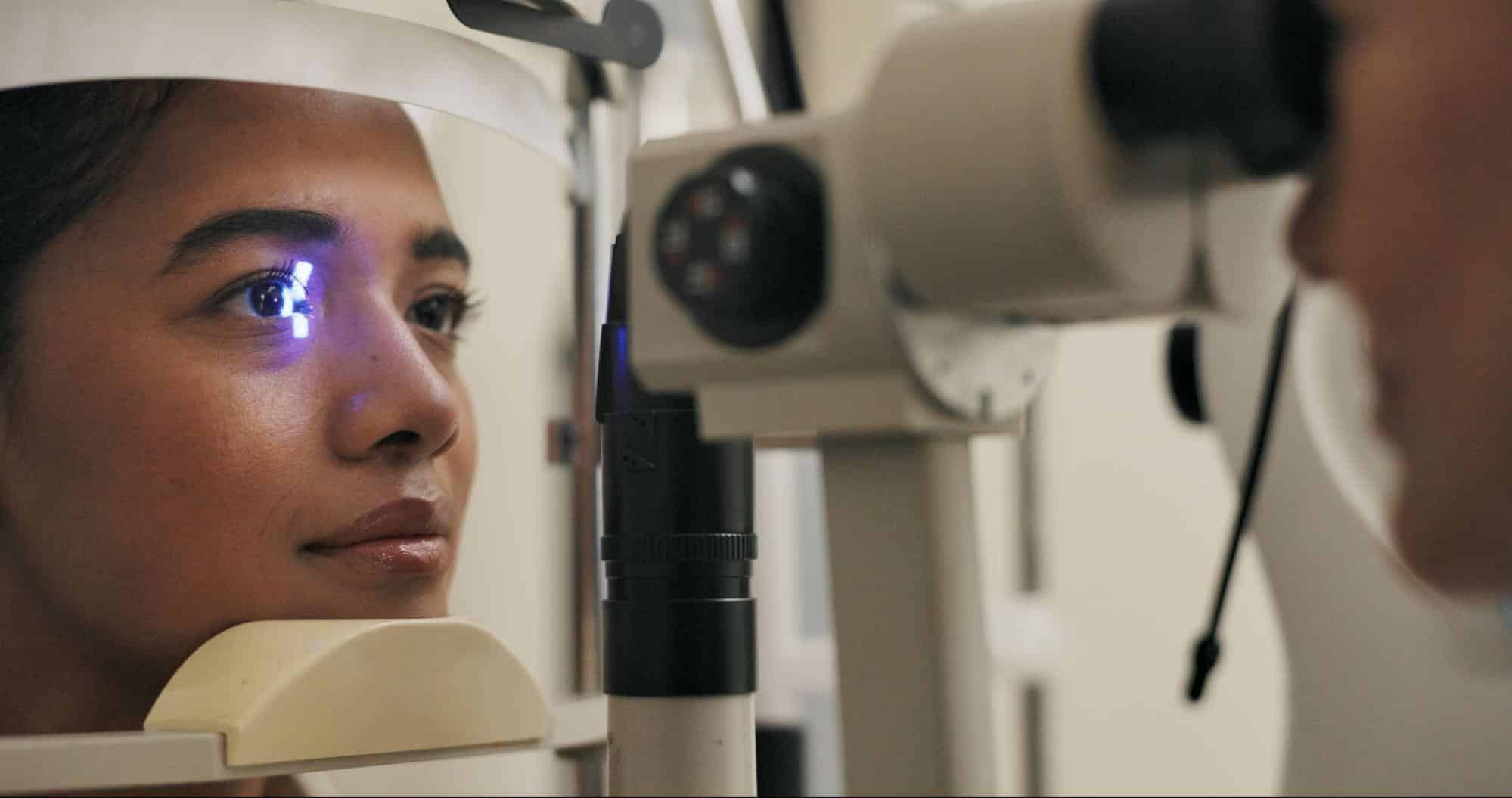
Astigmatism is identified during an eye examination, which typically includes visual acuity testing, refraction to determine the prescription, and keratometry or corneal topography to map the curvature of the cornea. Many patients are first diagnosed during a routine eye screening, even before they become aware of any symptoms.
Early diagnosis allows for appropriate correction and ongoing monitoring. This is particularly relevant for children, in whom uncorrected astigmatism can interfere with visual development and contribute to amblyopia (reduced vision in one or both eyes that does not improve with glasses alone).
How Astigmatism Can Be Corrected
Astigmatism treatment options range from optical aids to surgical procedures that alter the shape of the cornea itself. The appropriate choice depends on the degree of astigmatism, corneal anatomy, prescription stability, and individual clinical findings.
1. Glasses and Contact Lenses
The two main non-surgical options for correcting astigmatism are:
- Glasses with Cylindrical Lenses: The most common form of correction, compensating for the irregular corneal curvature by directing light to focus more accurately on the retina.
- Toric Contact Lenses: Lenses shaped to align with the axis of astigmatism on the eye, providing correction directly on the corneal surface.
Both options correct vision while worn, although they do not alter the underlying corneal shape.
2. Laser Vision Correction
Laser vision correction is a category of procedures that reshape the cornea so that light focuses more accurately on the retina, addressing the underlying cause of astigmatism rather than compensating for it externally.
The main laser-based options include:
LASIK: A flap-based procedure that uses a femtosecond laser to create a corneal flap (a hinged layer of the outer cornea), followed by an excimer laser that reshapes the underlying corneal tissue. LASIK eye surgery in Singapore is designed to correct myopia, hyperopia, and astigmatism.
ZEISS SMILE® Pro 2.0: A flapless procedure that uses a femtosecond laser to shape a lens-shaped piece of corneal tissue (a lenticule) within the cornea, which is then removed through a small incision of 2 to 4 millimetres. Zeiss Smile Pro currently treats myopia and astigmatism, with cyclotorsion compensation that aligns treatment to the eye’s natural axis during surgery.
Surface Ablation (TransPRK, PRK, LASEK, Epi-LASIK): Flapless procedures that reshape the surface of the cornea after the epithelium (outer surface layer) is removed or lifted. TransPRK eye surgery and the related options may be considered for patients with thinner corneas or specific lifestyles, such as contact sport athletes.
As with all refractive surgery, laser vision correction carries potential risks including post-operative dryness, glare, halos, undercorrection or overcorrection, and rare surgical complications. These factors are reviewed during the suitability assessment.
3. Implantable Collamer Lenses (ICL)
Toric ICLs correct astigmatism by placing a lens inside the eye rather than reshaping the cornea.
Key features include:
- Lens Design: Each toric ICL is a soft, flexible lens with a toric correction that aligns with the eye’s astigmatism axis.
- Implant Position: The lens sits inside the eye, between the iris and the natural lens, without altering the cornea.
Toric ICLs are typically considered when laser vision correction is not appropriate based on the individual clinical assessment.
Determining the Right Correction for Your Astigmatism
The appropriate correction for astigmatism depends on a comprehensive eye examination that evaluates the degree of astigmatism, corneal thickness and topography, prescription stability over the preceding 12 months, and the presence of any underlying conditions. No single procedure is suitable for every patient, and surgical correction may not be appropriate in all cases.
If you have been diagnosed with astigmatism or suspect that your vision may be affected, book a comprehensive eye screening with an eye specialist in Singapore at LSC Eye Clinic. Our team will assess the degree of astigmatism and discuss whether glasses, contact lenses, or a refractive procedure aligns with your eye anatomy and lifestyle.
Frequently Asked Questions About Lasik and Astigmatism
Will LASIK Correct Astigmatism?
LASIK is designed to correct astigmatism alongside myopia and hyperopia, and is a recognised option for many patients with low to moderate astigmatism. Suitability depends on the degree of astigmatism, corneal thickness, and prescription stability. Higher degrees of astigmatism, or astigmatism associated with irregular corneal shape such as keratoconus, may require alternative procedures.
Does LASIK Cure Astigmatism?
LASIK corrects astigmatism by reshaping the cornea rather than curing it in the strict medical sense. In most patients, the correction is stable over the long term, although some refractive change can occur with age or in specific clinical contexts.