Presbyopia (Lao Hua / 老花) Treatment in Singapore
Presbyopia (lao hua / 老花) is the gradual loss of the eye’s ability to focus on near objects, and it typically begins between the ages of 40 and 45. In Singapore, it is one of the most common reasons adults in this age range seek an eye assessment. The recommended treatment depends on prescription history, ocular surface health, and lifestyle considerations.
At LSC Eye Clinic, we provide specialist-led presbyopia assessment and a range of treatment options for near vision correction. These include ZEISS PRESBYOND laser blended vision, monovision LASIK, and lens-based approaches where clinically indicated.
If you notice difficulty with reading, mobile phone use, or close work, book a presbyopia assessment to discuss the options suited to your eyes.
What is Presbyopia (Lao Hua / 老花)?
Presbyopia (lao hua / 老花) is an age‑related condition where the eye gradually loses its ability to focus on near objects. This typically begins between the ages of 40 and 45, although the timing varies between individuals and may begin earlier in those who are mildly hyperopic (long-sighted).
Underlying Cause of Presbyopia
The underlying cause is a gradual loss of flexibility in the crystalline lens (the eye’s natural focusing lens), which sits behind the iris and changes shape to focus light onto the retina.
In Younger Eyes
When we are younger, the lens flexes easily between distance and near focus through a process called accommodation.
As We Age
As we age, the lens becomes
progressively stiffer, and the ciliary muscle that drives accommodation also weakens.
Presbyopia (Lao Hua / 老花)
The effect is reduced near focusing capacity, which patients first notice when reading small prints or working under dim light.
Presbyopia is not a disease and is considered a normal part of ageing. It progresses gradually, and most adults experience it to some degree by their mid-fifties, regardless of whether they have previously worn glasses for myopia or hyperopia.
Are You Experiencing These Symptoms?
If you are over 40 and these daily signs sound familiar, you may be experiencing presbyopia (lao hua / 老花).

THE "STRETCH"
Holding menus, books, or your phones further to read clearly.

THE FATIGUE
Eye strain or headaches during sustained reading or close work.

THE DIM LIGHT TEST
Difficulty reading small print in dim lighting.
A presbyopia assessment can clarify whether these symptoms are age-related and which treatment options may be appropriate for your eyes.
What is ZEISS PRESBYOND?
ZEISS PRESBYOND is a form of LASIK designed specifically for presbyopia in patients aged 40 to 60. It is performed using the ZEISS MEL 90® excimer laser, with a treatment profile calculated individually for each eye.
The approach is called laser blended vision because it combines a small intentional difference in correction between the two eyes (micro-anisometropia) with an extended depth of focus in each eye. The dominant eye is corrected for distance, the non-dominant eye to a slight myopic (short-sighted) setting of around -1.5 dioptres for near vision, and the focusing ranges overlap in an intermediate range called the Blend Zone.
This differs from conventional monovision LASIK, where the difference between the eyes is larger (often up to -3.0 dioptres) and the intermediate range is typically left uncorrected, which not all patients adapt to comfortably.
ZEISS PRESBYOND addresses prescriptions from -8.0 to +2.0 dioptres of myopia or hyperopia, with up to +2.0 dioptres of astigmatism. Suitability is confirmed through a clinical assessment that evaluates corneal shape, prescription, ocular surface health, and the patient’s tolerance of the laser blended vision principle, which is tested during the assessment.
Why Choose ZEISS PRESBYOND for Presbyopia (Lao Hua / 老花) Treatment?
Reduced Spectacle Dependence
Less day-to-day reliance on reading glasses for everyday tasks such as phone use, reading menus, and routine close work.
Same-Day Reading Vision
Many patients are able to read without glasses the same day, with vision typically stabilising within two to three weeks.
Continuous Focus Range
A continuous range of focus across near, intermediate, and distance vision, supporting daily activities without interchanging pairs of glasses.
The Seamless Solution for
Presbyopia (Lao Hua / 老花眼)
Your journey begins with trusted performance, tailored personalisation, and proven results with ZEISS PRESBYOND. Regain effortless clarity at every distance.
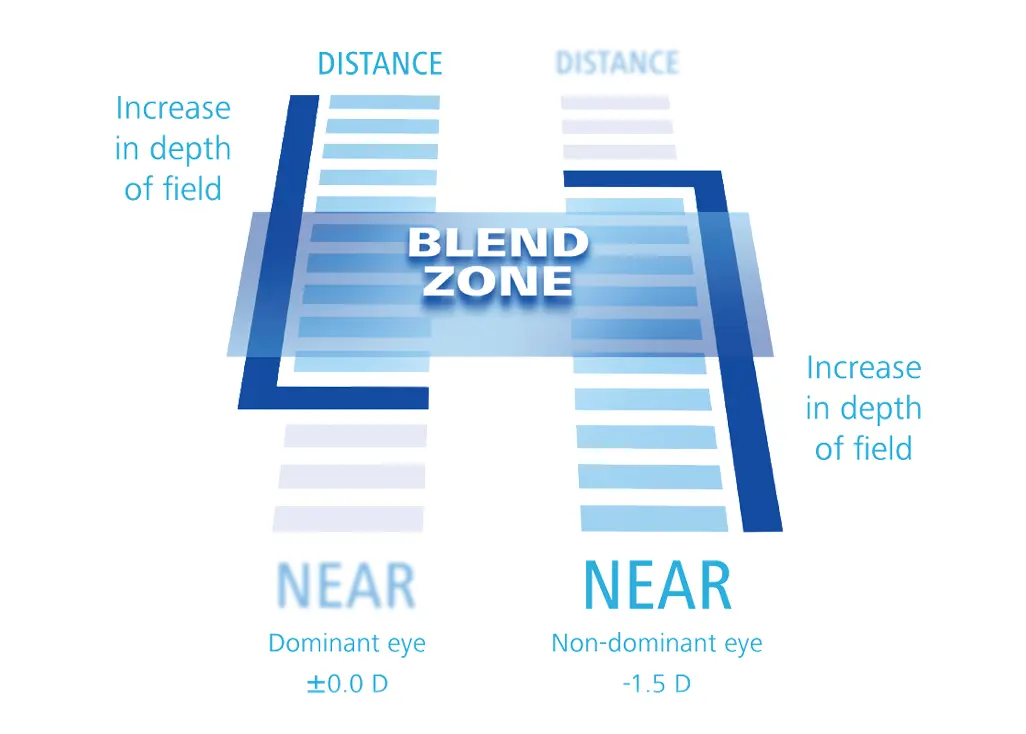
How does PRESBYOND® Work?
ZEISS PRESBYOND is performed in the same two-laser surgical sequence as standard LASIK. A femtosecond laser (a high-precision short-pulse laser) first creates a thin corneal flap (a hinged layer of the outer cornea), which is lifted to expose the underlying tissue.
An excimer laser (an ultraviolet laser that removes microscopic layers of tissue) then reshapes the cornea according to the PRESBYOND® treatment profile for that eye. The flap is repositioned and adheres without sutures.
The reshaping is aspheric, meaning the focusing power varies gradually across the optical zone of the cornea rather than being uniform. This is what extends the depth of focus in each eye and creates the overlap between the two vision shown below.
With Presbyopia (Lao Hua / 老花眼)

With ZEISS PRESBYOND®

These images are for illustrative purposes only. They are designed to help you better understand how certain eye conditions can affect your vision.
Whether ZEISS PRESBYOND is appropriate for your eyes is determined by a clinical assessment, which evaluates corneal thickness, prescription stability, ocular surface health, and tolerance of the laser blended vision principle.
Benefits of ZEISS PRESBYOND
PERFORMANCE
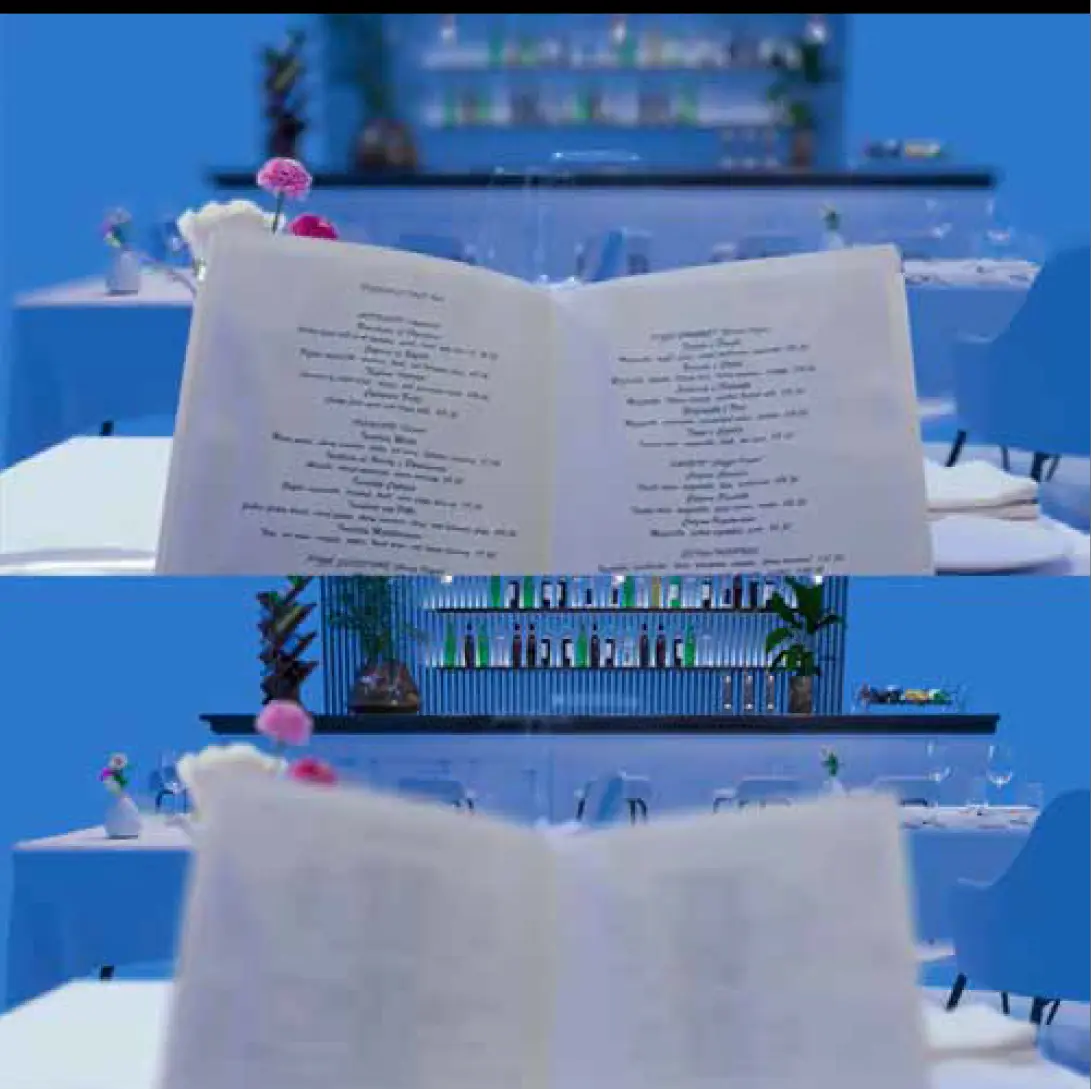
A continuous range of vision across near, intermediate, and distance, supported by the eye’s natural binocular vision.
PERSONALISED
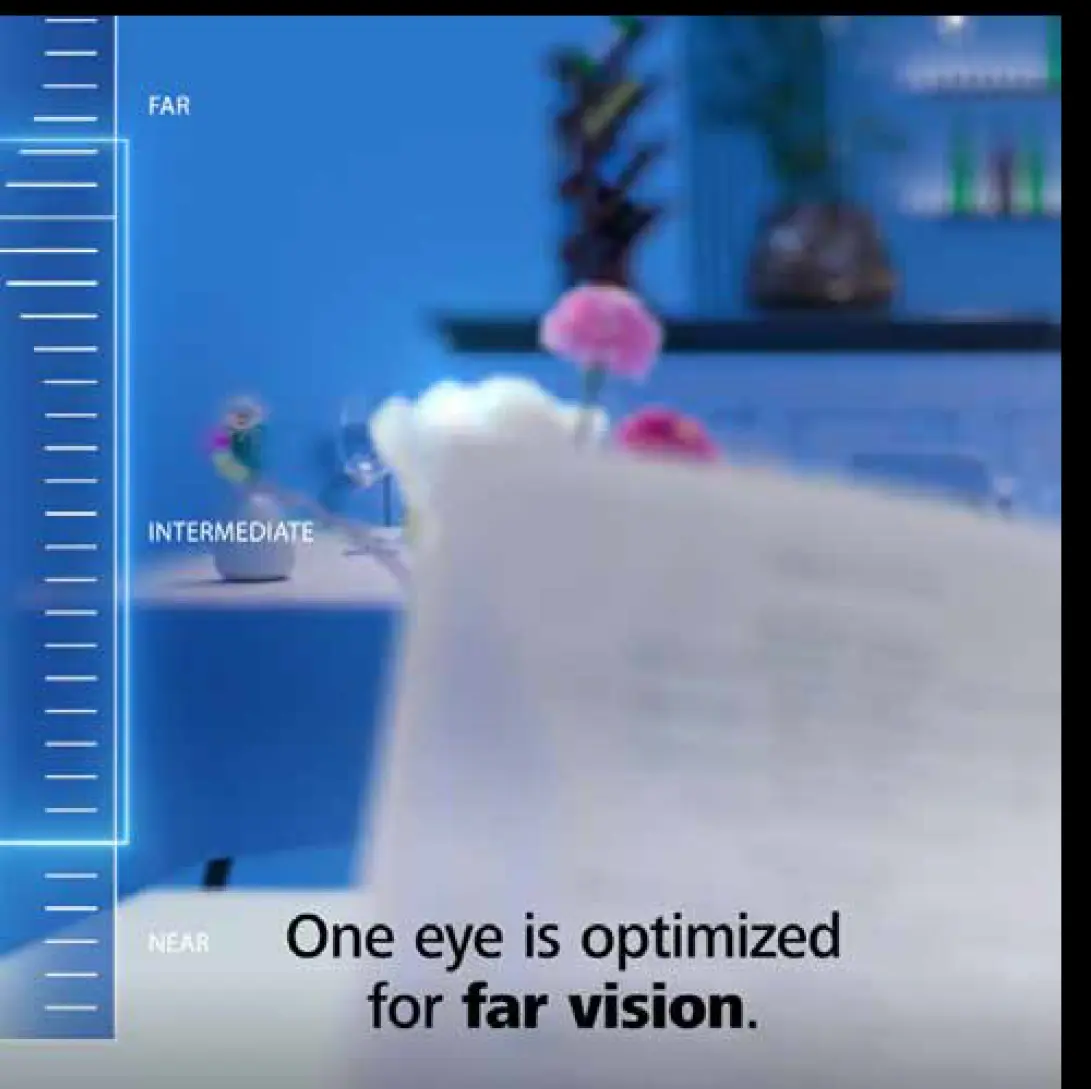
Treatment calibrated to each patient’s corneal shape, refraction, and ocular dominance.
PROVEN
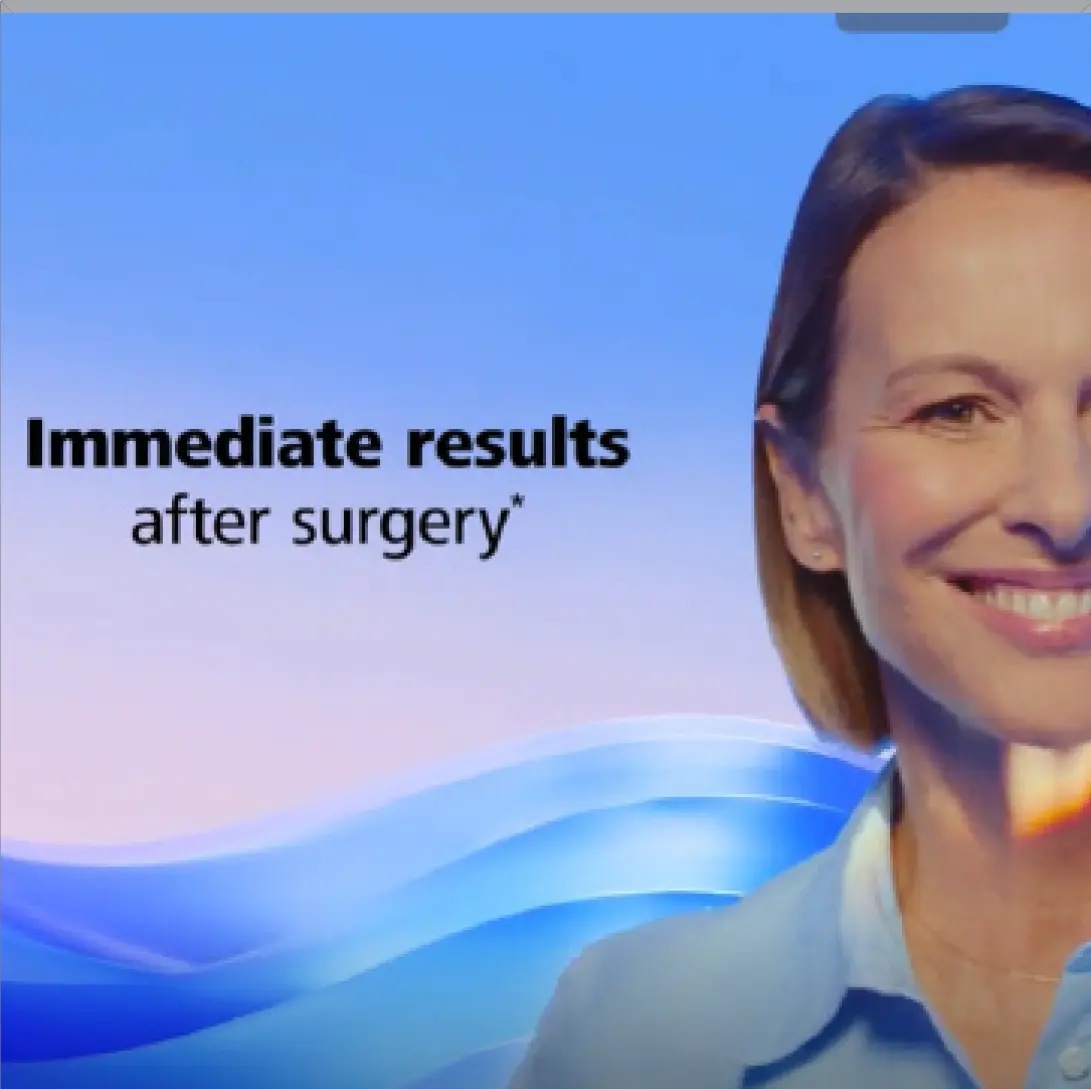
Studied across more than two decades of peer-reviewed clinical research, with high reported satisfaction in published long-term outcome studies.
Beyond the three principles above, the practical benefits patients commonly report include:
- Reduced dependence on reading glasses: Most patients find they can manage routine reading, phone use, and close work without reading glasses in good lighting conditions.
- Convenience for work and travel: Fewer pairs of glasses to carry, manage, or replace across daily routines.
- Improved everyday vision function: A continuous focusing range across the activities most commonly affected by presbyopia, including computer work and reading.
Outcomes vary between individuals. Some patients may still prefer reading glasses for very fine detail or extended close work in dim lighting. Specific expectations are reviewed with the ophthalmologist during the suitability assessment.
Who is Suitable for ZEISS PRESBYOND®?
You may be suitable for PRESBYOND® if you:
- Are aged 40 or above and experiencing presbyopia (lao hua / 老花)
- Currently depend on reading glasses for near tasks
- Have myopia, hyperopia, or astigmatism within the treatable range
- Have previously had LASIK and have since developed presbyopia
- Want to reduce reliance on glasses for daily activities such as reading, screen use, and work tasks
You may not be suitable for ZEISS PRESBYOND if:
- Visually significant cataract is present, in which case cataract surgery with a presbyopia-correcting intraocular lens may be more appropriate
- Severe or uncontrolled dry eye is present, which can affect laser vision correction outcomes
- Your corneal thickness or topography is outside the safe treatment range
- Your prescription has not been stable over the past 12 months
- You have certain ocular surface, retinal, or systemic conditions that affect healing
- You do not adapt comfortably to the laser blended vision principle during the in-clinic tolerance test
A comprehensive eye assessment is required to confirm suitability.
Presbyopia Assessment and Screening
A presbyopia and laser vision correction assessment at LSC Eye Clinic typically takes two to three hours and brings together several measurements that determine whether ZEISS PRESBYOND or another procedure is appropriate for your eyes. The assessment usually includes:
- Medical History of Eyes: A review of your eye health history, prior eye surgery, and any current symptoms or medications.
- Visual Acuity: A test of distance and near vision.
- Auto-Refraction: A computerised measurement of the refractive power of your eyes.
- Manifest Refraction: A subjective refinement of your prescription using lenses to confirm the clearest combination.
- Cycloplegic Refraction: A refraction performed after dilating drops relax the eye’s focusing muscle, used to confirm the true refractive error.
- Tonometry: A computerised measurement of the eye pressure using a non-contact device.
- Anterior Imaging: Corneal scans that measure thickness, map surface curvature, and assess the outer cell layer (epithelial mapping).
- Slit Lamp Examination: A detailed examination of the cornea, lens, vitreous, retina, optic nerve, and macula.
- Fundus Examination with Pupil Dilation: A detailed view of the back of the eye, performed after dilating drops widens the pupil.
- Ocular Dominance and Laser Blended Vision Tolerance Test: A check of which eye is dominant and how comfortably the brain combines slightly different focusing profiles between the two eyes.
- Consultation with an Ophthalmologist: A review of your clinical results, eye health history, and lifestyle considerations, with an explanation of which presbyopia treatment options may suit your eyes.
Patients are advised to discontinue soft contact lenses for at least three days before the assessment, and rigid gas permeable lenses (hard contact lenses) for longer, as contact lens wear can temporarily alter corneal shape. This allows the measurements to reflect your eyes at their natural baseline.
Regular eye examinations in Singapore are recommended every two years after age 40, since presbyopia commonly develops alongside other age-related eye conditions such as cataract, glaucoma, and age-related macular degeneration that benefit from early detection.
Recovery and Aftercare
Recovery from ZEISS PRESBYOND follows the general timeline of LASIK. Many patients are able to read without glasses on the day of the procedure, with vision typically stabilising over the following two to three weeks and continuing to refine over subsequent months.
In the first 24 hours, vision is usually blurred or hazy, with mild discomfort, light sensitivity, and a foreign body sensation. These effects tend to ease throughout the day, and most patients have functional vision by the following morning.
During the first week, patients are typically advised to follow these aftercare instructions to support healing:
- Rest the eyes and avoid extended screen use where possible
- Use prescribed lubricating and antibiotic drops as directed
- Avoid rubbing or pressing on the eyes
- Avoid eye makeup, swimming, and water sports
- Wear the protective eye shield during sleep as instructed
Most patients return to office work within a few days, although individual recovery varies. Reading and close work may feel slightly different in the first few weeks as the brain adapts to laser blended vision. Light exercise such as walking or stationary cycling is usually permitted within the first week. Contact sports and swimming are typically restricted for several weeks. The exact timeline is reviewed at follow-up visits.
Follow-up appointments are scheduled at intervals over the first six to twelve months to monitor healing and visual outcomes.
Other Presbyopia Treatment Options in Singapore
Several treatment pathways exist for presbyopia (lao hua / 老花), and the appropriate choice depends on the patient’s eye health, lifestyle, and visual priorities.
Non-Surgical Options
Reading glasses: The most common starting point. Suitable for patients who need correction only for occasional near tasks.
Bifocal or progressive spectacles: Combine distance and near correction in a single lens, useful for patients who already wear distance glasses.
Bifocal or multifocal contact lenses: Provide both distance and near correction in a single lens. Suitable for patients comfortable with contact lens wear, although near vision can feel less crisp than with dedicated reading lenses.
Monovision contact lenses: One lens corrects for distance, the other for near. Tolerance varies between individuals.
Surgical Options
ZEISS PRESBYOND Laser Blended Vision: A LASIK-based procedure that reshapes both corneas to create an overlapping focusing range (the Blend Zone) across distance, intermediate, and near vision.
Monovision LASIK: A LASIK-based procedure that reshapes one cornea for distance and the other for near. The difference between the two eyes is larger than in ZEISS PRESBYOND, and the depth of focus is not deliberately extended, which can leave a gap in the intermediate range that not all patients adapt to.
Cataract surgery with a presbyopia-correcting intraocular lens: When visually significant cataract is present, the natural lens is replaced with an intraocular lens that can provide both distance and near focus. Often appropriate for patients in their late fifties and beyond.
The appropriate choice depends on prescription history, ocular health, and tolerance of the underlying optical principle. A clinical assessment helps clarify which approach may be suitable.
Your PRESBYOND® Journey with LSC Eye Clinic
What to Expect on Treatment Day
ZEISS PRESBYOND is performed as an outpatient procedure. The laser treatment itself typically takes around 10 to 20 minutes for both eyes, although patients should expect to be in the clinic for two to three hours in total.
On arrival, patients complete registration and pre-operative checks, including a review of measurements taken at the earlier suitability assessment. Anaesthetic eye drops are administered to numb the surface of the eye, and the ophthalmologist explains the steps of the procedure.
The femtosecond laser creates a corneal flap (a hinged layer of the outer cornea), and the excimer laser reshapes the underlying tissue according to the calibrated PRESBYOND® treatment profile. The flap is repositioned, and the same is repeated for the second eye.
After the procedure, patients rest briefly in the clinic and receive post-operative instructions, prescribed eye drops, and the protective eye shield. Patients are advised to arrange a companion for the journey home, as vision remains blurred for several hours after treatment.
The first follow-up visit after presbyopia laser eye surgery is typically scheduled for the day after the procedure.
Meet Our Doctor at LSC Eye Clinic

Dr Daphne Han is the Medical Director and Senior Consultant Ophthalmologist at LSC Eye Clinic, located at Paragon Medical, Singapore. With over 20 years of clinical experience, she is an ophthalmologist whose practice focuses on laser vision correction and refractive procedures for myopia, astigmatism, hyperopia, and presbyopia (lao hua / 老花).
Dr Han is trained in a range of refractive procedures, including ZEISS PRESBYOND, ZEISS SMILE pro 2.0, LASIK, Epi-LASIK, LASEK, PRK, and Monovision LASIK. She also offers Implantable Contact Lenses (ICL) for patients unsuitable for laser-based correction.
In addition, Dr Han performs conventional and advanced cataract surgeries using microincision and laser-assisted techniques, with intraocular lens options appropriate to each patients’ clinical findings.
Frequently Asked Questions About Presbyopia Treatment
With ZEISS PRESBYOND, the dominant eye is corrected primarily for distance and the non-dominant eye for near, with an overlap in the intermediate range. Each eye alone will not see sharply across all distances, but together both eyes provide a continuous range of focus.
Anaesthetic eye drops are used during ZEISS PRESBYOND to numb the surface of the eye, and most patients report only mild discomfort during the procedure itself. Mild discomfort, light sensitivity, and a foreign body sensation are common in the early hours after surgery and typically resolve without intervention over the first day.
Both eyes are usually treated during the same appointment so patients experience the full benefit of laser blended vision from the outset. The full visit takes around two to three hours, with the laser treatment itself completed in 10 to 20 minutes.
Payment & Interest Free Instalment Options
Payment Options
We accept cash, NETS, and major credit cards.

Interest-Free Instalment Plans
Available with UOB, OCBC, DBS, and POSB credit cards.

- Up to 6 or 12 months
- Applicable to laser vision correction procedures and ICL only
Why Choose LSC Eye Clinic

EXPERTISE
Over 20 years of clinical experience in refractive procedures, including laser vision correction for presbyopia (lao hua / 老花), cataract surgery, and treatment for retinal and ocular surface conditions.
SAME-DAY APPOINTMENT
Same-day appointment and same-day surgery available (Subject to assessment and clinical availability)
EASY ACCESS
Located at Paragon Medical on Orchard Road, in central Singapore.
Regain Effortless Clarity At All Distances
WhatsApp: (65) 9843 1000
For general enquiries and appointment only
Tel: (65) 6836 1000
Email: [email protected]
Monday to Friday: 9am to 6pm
Saturday: 9am to 1pm
(Last registration at 11am)
Sunday & PH: Closed