
ICL Eye Surgery in Singapore
Implantable Collamer lens (ICL) surgery is a non-laser procedure for vision correction that involves placing a biocompatible lens inside the eye to reduce dependence on glasses or contact lenses. Unlike laser procedures that reshape the cornea, ICL works by adding a corrective lens between the iris and the natural crystalline lens, leaving the eye’s existing structures intact.
It is an established option for patients with myopia or astigmatism, particularly those who have been assessed as unsuitable for laser-based procedures such as LASIK or ZEISS SMILE® pro. The procedure is performed as a day surgery and patients typically return home the same day.
If you are considering ICL as a vision correction option, a thorough pre-surgical assessment is the first step.
What are Implantable Collamer Lenses?
Implantable Collamer lenses are soft, flexible lenses made from Collamer, a proprietary material developed by STAAR Surgical that contains a small amount of collagen. This composition makes the lens biocompatible, meaning it is generally well-tolerated by the eye and does not need to be removed under normal circumstances.
The procedure is performed as an outpatient surgery and typically takes 15 minutes. A small incision is made at the edge of the cornea, through which the folded lens is inserted and positioned between the iris and the natural crystalline lens. No stitches are required, and visual recovery is generally prompt.
Classified as a phakic intraocular lens procedure, ICL is designed to remain in place long term. However, should the need arise, whether due to changes in prescription or other clinical reasons, the lens can be removed or replaced by a surgeon. Suitability for the procedure, and whether ICL or another option is more appropriate, is determined through a comprehensive eye assessment.
Who is it for?
ICL may be considered for patients who meet certain clinical criteria. A formal eye assessment is required to confirm suitability.
Patients who may be evaluated for ICL typically include those with:
- Moderate to high myopia, including prescriptions above 1,000 degrees, where night vision disturbances such as halos and starbursts can be more pronounced after laser procedures
- Astigmatism, which the Visian® ICL Toric lens is designed to address
- Prescriptions outside the treatment range of laser procedures, as ICL covers a wider degree of refractive error
- Thin corneas that may not be suitable for laser refractive procedures such as LASIK or SMILE
- Dry eye tendencies, as ICL does not involve corneal tissue removal, which can reduce the risk of post-surgical dry eye
- A stable prescription over a period of time, as assessed during consultation
That said, patients should also have generally healthy eyes. Conditions such as uncontrolled glaucoma, advanced cataracts, or insufficient anterior chamber depth may affect suitability for ICL.
Eligibility is determined only after detailed pre-surgical screening. A consultation with the doctor will help clarify whether ICL, a laser procedure, or another option is the most appropriate approach for each individual.
Visian® ICL
Following an assessment confirming suitability, the Visian® lens will be custom-made to match each patient’s individual prescription, specifying the power, size, and configuration needed.
The Visian® lens is produced in Switzerland and USA, and is approved by the U.S. Food and Drug Administration (FDA), as well as regulatory authorities in Singapore and a number of other countries.
Collamer, the material used in Visian® ICL, is a soft and flexible proprietary blend that incorporates collagen. Because of this composition, the lens is designed to integrate without being identified as a foreign object by the eye’s natural response. It remains in place without being perceptible during daily activity.
Given that the lens is custom-made, the earliest available surgery date is typically one week from the initial assessment.
Visian® ICL and Vision Quality
The optical design of the Visian® ICL is intended to support clear, consistent vision correction across a range of prescription levels. Because the lens is positioned inside the eye rather than on the corneal surface, it corrects vision without altering the shape of the cornea.
The Collamer material includes a UV-filtering component, offering an additional layer of protection from ultraviolet light.
Individual outcomes vary and are influenced by factors including the degree of refractive error, eye anatomy, and overall eye health. Patients are encouraged to discuss realistic expectations with the doctor during the pre-surgical consultation.
Benefits of Visian® ICL
ICL may offer certain advantages over laser procedures, particularly for patients with higher prescriptions or specific anatomical considerations. Benefits reported in clinical literature and patient studies include:
- Preservation of Corneal Tissue: No removal or reshaping of the cornea is involved
- Suitable for a Wider Range of Prescriptions: Treatment range extends to higher degrees of myopia and astigmatism that may not be addressed by laser procedures
- Reduced Risk of Post-Surgical Dry Eye: ICL does not involve removal or reshaping of corneal tissue, which means the corneal nerves remain intact. This is a relevant consideration for patients who already experience dry eye symptoms prior to surgery
- Potentially Reduced Night Vision Disturbances: for patients with higher prescriptions, halos and starbursts following laser procedures can be more noticeable and harder to adapt to. ICL may result in fewer of these visual phenomena, though individual experience varies
- Reversibility: The lens can be removed or replaced if clinically necessary
- Lifestyle Convenience: Reduced or eliminated dependence on glasses and contact lenses for daily activities, sports, and travel
Results vary between individuals. The doctor will outline what outcomes are realistic based on each patient’s specific clinical profile during the assessment.

What to Expect During Your Pre-ICL Evaluation?
Before any decision is made about ICL surgery, a comprehensive eye evaluation is conducted. This assessment provides the clinical data needed to determine suitability and, if appropriate, to specify the correct lens parameters.
The evaluation typically includes:
- Measurement of visual acuity and refractive error
- Corneal topography and thickness measurements
- Anterior chamber depth assessment, a key factor in determining whether there is sufficient space to place the ICL safely
- Intraocular pressure measurement
- Retinal examination
- General eye health review
This evaluation typically takes around one to two hours. Pupil-dilating eye drops are administered during the assessment, which may cause light sensitivity for a few hours afterwards. Patients are advised to bring sunglasses and, if possible, arrange for someone to accompany them home.
Contact lens wearers should stop using lenses before the evaluation:
- Soft contact lenses: at least 3 days prior
- Hard contact lenses: at least 14 days prior
This step is important as contact lens wear can temporarily alter corneal shape, which may affect measurement accuracy.
What to Expect During Surgery?
ICL surgery is performed as a day procedure. Patients are typically discharged on the same day and do not require an overnight stay.
On the day of surgery:
- Arrive for registration and pre-operative checks
- The surgical team will review your details and preparation instructions
- Eye drops are administered to dilate the eye
During the procedure:
- A small incision of approximately 2 to 3mm is made at the base of the cornea
- The folded ICL is inserted through the incision and positioned between the iris and the natural crystalline lens
- The surgeon makes any necessary adjustments to ensure correct positioning
- The incision is self-sealing and typically heals without stitches
- If both eyes are being treated, the procedure is repeated for the second eye
- Each eye typically takes around 20 to 30 minutes
What to Expect After ICL Surgery?
Recovery following ICL operation is generally straightforward, with most patients able to resume light daily activities within one to two days.
Typical recovery pattern:
- Noticeable improvement in vision within the first day or two following surgery
- Further stabilisation over the following weeks
- Follow-up visits will be scheduled to monitor healing and lens position
Post-operative care guidelines (as directed by your doctor):
- Use prescribed eye drops as instructed
- Avoid rubbing the eyes
- Refrain from strenuous physical activity and contact sports for the period advised by your doctor
- Avoid swimming and exposure to water, including showers directly to the face, for the recommended duration
- Wear sunglasses outdoors if light sensitivity is present
- Contact the clinic promptly if you experience unusual pain, a sudden change in vision, or increased redness
Ongoing care:
- Attend all scheduled follow-up appointments after surgery
- Annual eye check-ups are recommended to monitor eye health, intraocular pressure, and the position of the ICL over the long term
ICL is designed to remain in the eye indefinitely. However, it can be removed if medically necessary or if vision correction needs change over time.
ICL Eye Surgery vs LASIK vs Other Options
| ICL | LASIK | SMILE® pro 2.0 | |
| How it works | A lens is inserted inside the eye | Cornea is reshaped using an excimer laser with a flap | Cornea is reshaped via small incision, no flap |
| Suitable prescription range | Higher myopia and astigmatism; treatment range up to approximately -18.00D | Typically mild to moderate myopia and astigmatism | Typically mild to high myopia with or without astigmatism |
| Corneal tissue | Not affected | Tissue removed; flap created | Tissue removed; no flap |
| Thin corneas | May be suitable | May not be suitable | May not be suitable |
| Reversibility | Lens can be removed if needed | Not reversible | Not reversible |
| Recovery | Generally prompt; most patients resume activities within 1–2 days | Generally prompt | Generally prompt |
| Dry eye risk | Lower risk, as corneal nerves are not disrupted | Some risk, particularly in the short term | Lower risk compared to LASIK |
| Night vision disturbances | May be reduced compared to LASIK in high myopia patients | Possible, particularly at higher prescriptions | Possible |
This table provides a general comparison. Individual suitability depends on clinical assessment. A consultation with the doctor is required to determine which option is appropriate.
Why Choose LSC Eye Clinic for ICL in Singapore
LSC Eye Clinic has been performing refractive surgery since 2005, with a clinical focus on laser vision correction and lens implant procedures. ICL surgery is performed by Dr Daphne Han, who has subspecialty training and experience in refractive and lens-based procedures.
The clinic uses current diagnostic equipment for pre-surgical evaluation, including corneal topography and anterior segment imaging, to support accurate assessment and lens selection.
ICL is recommended only when the clinical assessment indicates it is appropriate for the individual patient. The consultation process is structured to give patients a clear understanding of their options, the procedure involved, and what to expect, before any decision is made.
LSC Eye Clinic is located at Paragon Medical on Orchard Road, offering accessible specialist eye care in a clinical setting.
Payment Options
We Accept Cash, Nets, and Major Credit Cards:

– Installment Plans (Interest-Free) are available using UOB, OCBC, DBS/POSB credit cards. You can choose either 6 or 12 months of payment plans.
– Medisave is not applicable for LASIK surgeries
Other Laser Vision Correction Procedures
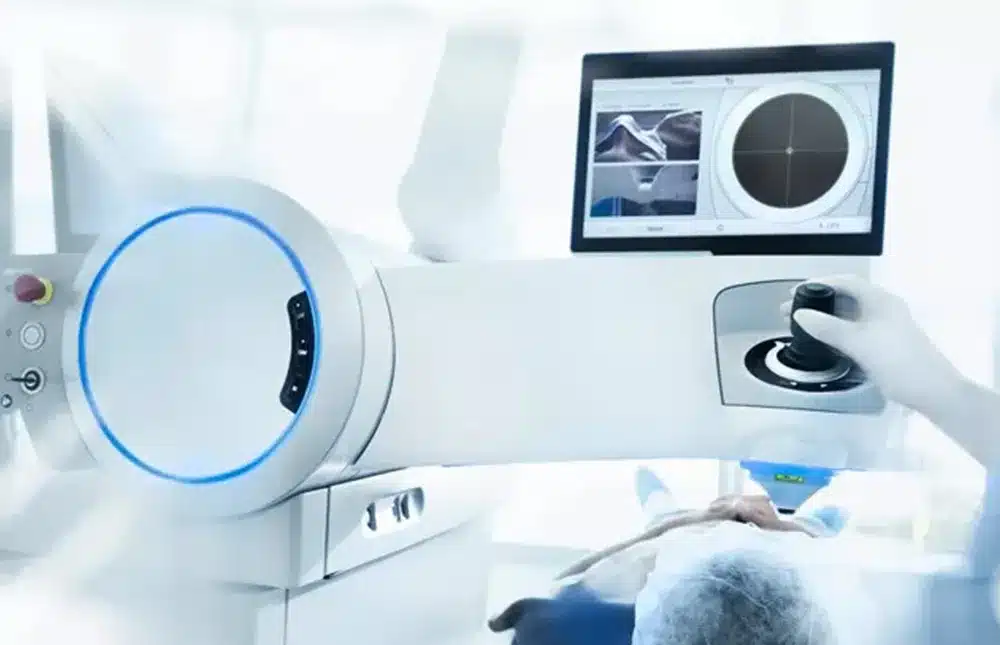
A flapless, minimally invasive laser procedure for the correction of myopia and astigmatism, using ZEISS technology to reshape the cornea through a small incision.
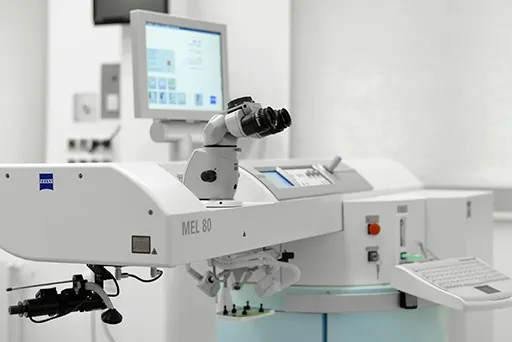
A widely performed laser refractive procedure that uses an excimer laser to reshape the corneal tissue after the creation of a thin corneal flap, correcting myopia, astigmatism, and hyperopia.
Meet Our Doctor

Dr Daphne Han
Medical Director and Senior Consultant
Ophthalmologist
MBBS (Melbourne), MMed (NUS), FRCS (Edinburgh), FAMS (Ophthalmology)
Subspecialty: Laser Vision Correction and Lens Implant Surgery
Dr Daphne Han has been performing refractive and lens implant procedures since LSC Eye Clinic’s early years, with a clinical focus that spans laser vision correction, including ICL. She has subspecialty training in lens implant surgery and continues to pursue ongoing professional development in refractive surgical techniques. Patients considering ICL are assessed and treated under her direct care, with the consultation structured to support informed decision-making before any surgical recommendation is made.
Request for An Appointment

Tel: +65 6836 1000
Whatsapp: +65 9843 1000
For general enquiries and appointment only
Email: [email protected]
Monday to Friday: 9am to 6pm
Saturday: 9am to 4pm
*Last Registration Time 2pm
Sunday & PH: Closed
Frequently Asked Questions About ICL Eye Surgery
The Visian® ICL is designed to remain in the eye on a long-term basis. Studies have followed patients for over a decade with stable outcomes reported. As with all implanted devices, regular follow-up with your doctor is recommended to monitor eye health over time.
Yes. One of the characteristics of ICL is that it is removable. If your vision changes significantly, or if clinical circumstances require it, the lens can be removed or exchanged by a surgeon. This is one of the factors that distinguishes ICL from laser-based procedures, which permanently alter corneal tissue.
Yes. When cataract surgery becomes necessary, the ICL can be removed at the same time as the natural lens is replaced with an intraocular lens (IOL). Our surgeon will take the ICL into account when planning cataract surgery. It is advisable to inform your future treating surgeon that you have had an ICL implanted.
The ICL is not designed to be perceptible once positioned correctly in the eye. Most patients report no sensation of the lens during normal daily activity. The Collamer material is biocompatible and integrates without triggering a foreign body response.
Yes. Contact lens wear can temporarily alter the shape of the cornea, which may affect the accuracy of pre-surgical measurements. For soft contact lens wearers, lenses should be removed at least 3 days before the assessment. For hard contact lens wearers, at least 14 days is required. Our doctor may provide specific guidance based on your lens type.
Follow-up appointments are typically scheduled at intervals after surgery, commonly at one day, one week, one month, and three months post-procedure. After the initial recovery period, annual eye check-ups are recommended to monitor intraocular pressure, lens position, and overall eye health.
If the assessment determines that ICL is not appropriate for you, the doctor will discuss other options based on your clinical profile. These may include laser procedures such as ZEISS SMILE® pro 2.0, LASIK, or TransPRK, depending on your corneal measurements, prescription, and eye health. In some cases, no surgical intervention may be recommended.
Yes. LSC Eye Clinic offers interest-free instalment plans through UOB, OCBC, and DBS/POSB credit cards, with options for 6-month or 12-month repayment terms. Please note that MediSave is not applicable for ICL or other refractive procedures. Speak with the clinic's team for current pricing and payment details.