Pterygium
Pterygium treatment at LSC Eye Clinic covers the assessment, monitoring and surgical removal of pterygium, a growth on the surface of the eye that can affect comfort, vision and appearance. Care is led by specialist ophthalmologists in Singapore.
Each pterygium is assessed individually, and the right approach depends on your symptoms, the size of the growth, and how it is affecting your eye.

What Is Pterygium?
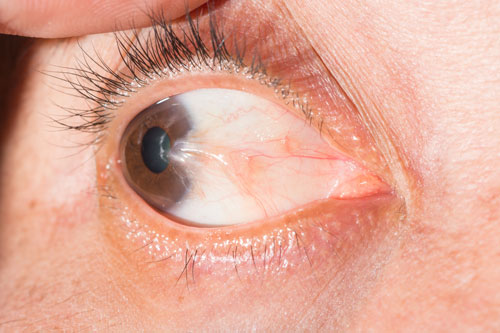
A pterygium (from the Greek word for “little wing”) is a fleshy, pinkish growth that forms on the white of the eye. It usually develops on the side closer to the nose and can slowly extend onto the cornea (the clear front surface of the eye).
The growth begins on the conjunctiva (the thin membrane covering the white of the eye) and may spread towards the pupil. It can affect one eye or both, and is generally benign rather than cancerous. When it progresses towards the centre of the cornea, it can cause irritation and affect vision.
A pterygium often relates to long-term exposure to ultraviolet light, wind, dust, and ongoing eye irritation.
What Causes Pterygium?
Pterygium is common in countries near the equator, including Singapore, where sunlight is intense throughout the year. Long-term exposure to ultraviolet (UV) light from the sun is considered the main cause, which is why the condition is sometimes called “Surfer’s Eye”.
People who spend long hours outdoors without UV protection, such as sunglasses, have a higher risk. Regular exposure to wind, dust, smoke, sand and pollen can also contribute.
Pterygium tends to develop in adults between 30 and 50 years of age and is rarely seen in children. People with lighter skin and eyes may also be at higher risk.
When Pterygium Needs Treatment
Not every pterygium needs immediate treatment. A small, stable pterygium that causes few symptoms can often be monitored over time, with regular checks to track whether it is growing.
Treatment may be considered when the pterygium causes ongoing redness, irritation, a foreign body sensation (the feeling of something in the eye), blurred vision, or becomes a cosmetic concern.
A pterygium that grows towards the centre of the cornea can distort its shape and affect vision, which is one reason it is assessed before it progresses.
Why See an Eye Specialist for Pterygium
A pterygium may look like a minor surface change, but it can continue to grow and alter the shape of the cornea. Over-the-counter drops may ease irritation temporarily, but they do not stop the growth or reverse it.
An eye specialist can assess how far the pterygium extends, whether it is causing astigmatism (an irregular curve of the cornea that blurs vision), and whether the cornea is at risk of scarring.
A specialist assessment also clarifies whether monitoring is enough or whether pterygium surgery is appropriate, and helps reduce the risk of avoidable deterioration in vision.
Common Symptoms of Pterygium
Pterygium symptoms vary with the size of the growth and how much it affects the eye:
- Redness over the white of the eye
- Irritation or a gritty sensation in the eye
- Tearing or watering of the eye
- Dryness, particularly in air-conditioned environments
- Blurred vision when the growth reaches the cornea
- A visible patch of raised tissue on the eye
Symptoms may become more noticeable in dry weather, windy conditions, or after prolonged sun exposure.
How Pterygium Is Diagnosed
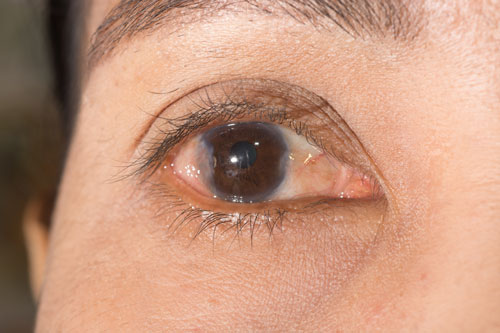
A pterygium is usually diagnosed during a clinical eye examination, which involves several steps:
- Symptom Review: The doctor asks about your symptoms, how long they have been present, and any related sun exposure.
- Vision Check: The doctor checks your vision to see whether the growth is affecting clarity.
- Slit Lamp Examination: The doctor examines your eye under a slit lamp (a microscope with a bright light) to assess the pterygium’s size and corneal involvement.
- Corneal Measurements: The doctor may measure your cornea to check whether the pterygium is causing astigmatism.
A pterygium can also be picked up during a routine eye screening, after which the doctor advises whether monitoring or surgery is appropriate.
Treatment for Pterygium
Treatment for pterygium depends on the symptoms and whether the growth is affecting your vision or comfort:
| Approach | What It Involves | When It Is Used |
| Non-surgical management | Lubricating eye drops or ointment to relieve redness, irritation and dryness. | Mild pterygium with occasional discomfort and no effect on vision. |
| Surgical removal | Excision of the growth with a conjunctival autograft placed over the area. | Pterygium that affects vision, grows towards the pupil, or causes persistent symptoms or cosmetic concern. |
Eye drops and ointment ease symptoms but do not remove a pterygium. When the growth blurs vision or becomes cosmetically obvious, surgery may be considered to remove it.
Pterygium surgery aims to remove the growth, limit further visual deterioration, reduce redness, and improve the appearance of the eye.
Pterygium Surgery: How It Works
Pterygium surgery is usually performed as a day procedure, meaning you can return home the same day. The surgery typically takes around 30 to 45 minutes for the affected eye.
Once the eye is numbed with anaesthetic drops, the procedure involves a few key steps:
- Removing the Growth: The surgeon removes the pterygium from the surface of the eye.
- Taking a Graft: The surgeon takes a small piece of healthy tissue (a conjunctival autograft) from under your own upper eyelid.
- Securing the Graft: The surgeon places the graft over the bare area, securing it with tissue glue or fine stitches.
Using a graft, rather than leaving the area bare, helps lower the chance of the pterygium growing back.
At our eye clinic in Singapore, this procedure is performed by specialist ophthalmologists.
Is Laser Used for Pterygium Removal?
A pterygium is removed through surgical excision, where the growth is detached from the eye’s surface and the area covered with a graft. A laser is not a standalone treatment for pterygium and is not routinely part of the procedure.
A consultation can clarify which approach is appropriate for your eye and whether a laser has any role in your treatment.
Risks and Recurrence After Surgery
Pterygium surgery is generally safe, though as with any procedure, there are some risks to be aware of:
- Recurrence: The pterygium can grow back, which is why a graft is placed to lower this risk.
- Infection: Eye surgery carries a small risk of infection, which is managed with prescribed drops.
- Scarring or irritation: Mild scarring, redness, or a gritty feeling can occur while the eye heals.
- Delayed healing: The graft site may take longer to settle in some patients.
Recurrence is the main long-term concern after pterygium surgery, and the risk varies between individuals. However, using a conjunctival autograft can potentially reduce the likelihood of recurrence compared with removing the growth alone.
Recovery and Aftercare Post Pterygium Treatment
Recovery after pterygium surgery covers the first few weeks of healing and the care that supports it:
| Recovery Aspect | What This Involves |
| Going Home | Most patients return home the same day, with an eye patch or shield worn for a day or two. |
| Activity | Light activities or desk work can usually resume within a day or so. |
| Eye Drops | Prescribed drops, used as directed, support healing and reduce inflammation. |
| Symptoms | Some redness, watering, or a gritty feeling is common in the first weeks and settles gradually. |
| Follow-Up | Review visits allow the eye and graft to be monitored as they heal. |
| Eye Protection | Shielding the eye from dust, wind and strong sunlight, including sunglasses outdoors, supports healing. |
Recovery varies between individuals, so treat the information above as a general guide rather than a definitive timeline.
Meet Our Doctor

Dr Daphne Han
Medical Director and Senior Consultant Ophthalmologist
MBBS (Melbourne), MMed (NUS), FRCS (Edinburgh), FAMS (Ophthalmology)
Specialty: Laser Vision Correction and Lens Implant Surgery
Dr Daphne Han is the Medical Director and Senior Consultant Ophthalmologist at LSC Eye Clinic, with over 20 years of clinical experience in ophthalmology. Her subspecialty focus covers laser vision correction and lens implant surgery, with experience in managing corneal and refractive conditions including pterygium, encompassing LASIK, ZEISS SMILE® pro 2.0, ZEISS PRESBYOND®, Epi-LASIK, LASEK, PRK, and Implantable Collamer Lenses (ICL) for patients unsuitable for laser-based correction.
Dr Han trained at the Singapore National Eye Centre (SNEC), where she served for over 14 years, and has completed advanced fellowship training internationally, including at IROC Zurich under Professor Theo Seiler and at the Cincinnati Eye Institute. She holds an appointment as Adjunct Assistant Professor at Duke-NUS Medical School and remains active as a published author and peer reviewer in the field of refractive surgery.
In addition to refractive procedures, Dr Han performs conventional and laser-assisted cataract surgery, pterygium surgery, and manages conditions including glaucoma and general ophthalmology, providing clinical oversight across a broad range of eye conditions.
Payment Options
We Accept Cash, Nets, and Major Credit Cards:

Interest-Free Instalment Plans
Available with UOB, OCBC, DBS, and POSB bank credit cards.

MediSave
Pterygium surgery and other eye procedures are MediSave claimable.
Our clinic is able to assist with your claim.
Many private insurance providers also cover pterygium surgery claims.

Insurance
We are on the specialist panels of various Insurance Plans:

Why Choose LSC Eye Clinic for Pterygium Treatment

Specialist Assessment
Specialist ophthalmologists assess the pterygium, your symptoms, and its effects on your vision before treatment.
Careful Surgical Planning
The procedure is planned around your eye, with the graft technique matched to the growth being removed.
Recurrence Prevention Focus
A conjunctival autograft is placed during surgery to lower the chance of the pterygium growing back.
Aftercare Support
Follow-up reviews monitor healing as the eye recovers and help detect any recurrence early.
Suitability and outcomes vary for every individual. A clinical assessment will determine whether pterygium treatment is appropriate for your eyes.
Frequently Asked Questions About Pterygium Surgery
A pterygium does not disappear on its own, though a small one may stay stable for years. Lubricating drops can ease symptoms, but surgery is the only way to remove the growth itself.
Signs that a pterygium is progressing include increasing redness, more frequent irritation, the growth extending further onto the cornea, or new blurring of vision. A check-up can confirm whether it is changing.
Your eye is numbed with anaesthetic drops during pterygium surgery, so you should feel little or no pain during the procedure. Afterwards, mild discomfort, watering, or a gritty sensation may occur for a few days as the eye heals.
Pterygium surgery usually takes around 30 to 45 minutes for the affected eye. It is performed as a day procedure, so you can usually return home the same day after a short recovery period at the clinic.
Recurrence is possible, which is the main reason a conjunctival graft is placed over the area. Using a graft lowers the chance of regrowth compared with removing the pterygium on its own.
Most patients return to desk-based work a day or so after surgery. However, you may need to limit strenuous activity, swimming, and exposure to dusty environments for a short period while your eye heals.
You will usually be advised to stop wearing contact lenses for a period before your assessment and surgery. Your eye care team will let you know how many days, based on your lenses.
In the early healing period, avoid rubbing your eye, swimming, and being in dusty or windy environments. Wearing sunglasses outdoors helps protect the eye, and you should use your prescribed drops as directed.
Pterygium surgery is MediSave claimable, and many private insurance plans also cover it. Our clinic can help you check your coverage and assist with the claim before your procedure.
You should see a doctor if you notice a growing patch on your eye, persistent redness or irritation, or changes in your vision. Early assessment helps decide whether monitoring or treatment is needed.
Other Eye Services

Assessment and treatment of dry, gritty, or irritated eyes to improve daily comfort.

Diagnosis and treatment of eye infections, such as conjunctivitis, to relieve symptoms and protect vision.