
LASIK vs SMILE in Singapore: How to Decide Which Is Better for You
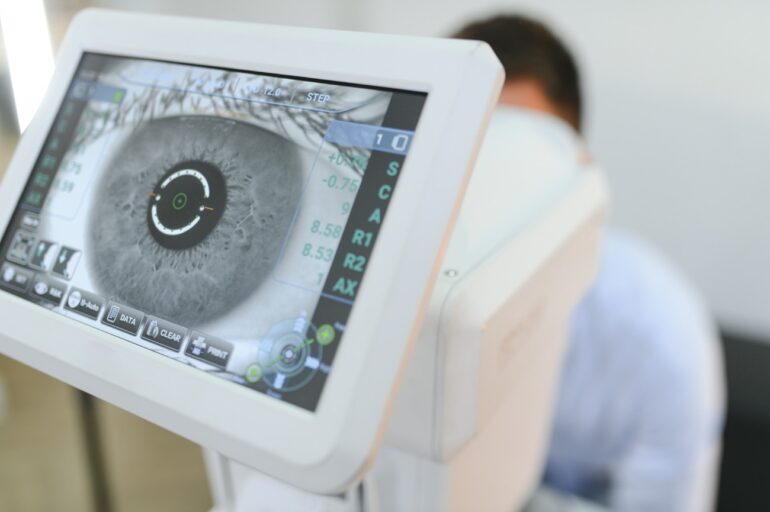
Patients researching laser vision correction in Singapore often weigh between LASIK or SMILE, two established procedures for treating myopia (short-sightedness) and astigmatism. Both reshape the cornea to bring light into sharper focus, although they differ in how the cornea is accessed and in the post-operative experience each involves.
Neither procedure is universally better than the other. A procedure that suits one patient may be less appropriate for another, since the right choice depends on eye anatomy, refractive error, lifestyle, and individual treatment goals.
As such, the clearest way to know which is better for you is to start with understanding how each procedure reshapes the cornea.
How LASIK and SMILE Work
LASIK and SMILE are both laser procedures that correct refractive errors by reshaping the cornea, although each uses a different surgical approach to achieve that result.
LASIK (Laser-Assisted In Situ Keratomileusis)
LASIK begins with the creation of a corneal flap (a hinged layer of the outer cornea), formed with a femtosecond laser. The surgeon lifts the flap, reshapes the underlying corneal tissue with an excimer laser, then repositions the flap so it heals in place.
LASIK can correct myopia, hyperopia (long-sightedness), and astigmatism, and has been performed worldwide for more than two decades.
Many patients notice clearer vision within the first day, with the result continuing to stabilise over the following weeks.
SMILE (Small-Incision Lenticule Extraction)
SMILE, or small-incision lenticule extraction, is a flapless laser procedure. A femtosecond laser shapes a small lens-shaped piece of corneal tissue (a lenticule) within the cornea, which the surgeon then removes through a small incision of 2 to 4 millimetres.
Because no flap is created, more of the cornea’s outer structure stays intact. The current generation of the procedure used at LSC Eye Clinic is ZEISS SMILE® pro 2.0, which is designed to correct myopia, hyperopia and astigmatism, at reduced treatment times and with enhanced accuracy.
For patients drawn to an approach that avoids a corneal flap, SMILE pro 2.0 is often considered.
Key Differences Between LASIK vs SMILE
The main differences characterising the LASIK vs SMILE comparison appear across several aspects.
|
Aspect |
LASIK |
SMILE pro 2.0 |
|---|---|---|
|
Surgical technique |
Creates a hinged corneal flap to access the underlying tissue for reshaping. |
Flapless. Reshapes the cornea through a small incision. |
|
Incision size |
Larger flap circumference around the cornea. |
Small incision of 2 to 4 mm. |
|
Conditions treated |
Myopia, hyperopia, and astigmatism. |
Myopia, hyperopia and astigmatism. |
|
Recovery timeline |
Clearer vision the following day, stabilising over the next few weeks |
Functional vision often within 24 hours, refining over the first week. |
|
Dry eye risk |
May be higher, as flap creation disturbs more of the corneal nerves involved in tear production. |
Tends to disturb fewer corneal nerves, which may lower the likelihood of post-operative dryness. |
|
Suitable candidates |
Patients with very high myopia or mixed astigmatism, where the wider treatment range may be an advantage. |
Patients with active or sports-oriented lifestyles, where the flapless approach can reduce the risk of flap-related complications. |
LASIK vs SMILE: How to Decide Which Procedure May Be More Suitable for You
Laser vision correction in Singapore includes several procedures beyond LASIK and SMILE pro 2.0. The comparison table below sets out the main options offered at LSC Eye Clinic, including TransPRK and ZEISS PRESBYOND®, with each procedure’s treatment range, key benefits, and typical recovery timeline.

Comparing the procedures on paper is a useful starting point, although the most reliable way to choose between LASIK vs ZEISS SMILE® pro 2.0 is a clinical assessment with an eye specialist in Singapore, rather than a general online comparison.
Factors like corneal thickness, the type and severity of your refractive error, lifestyle, and personal preference will all influence which procedure may be more appropriate.
1. Consider Your Refractive Error
Refractive error is one of the first factors to weigh when choosing between LASIK vs SMILE pro 2.0, since each procedure covers a slightly different range of prescriptions and addresses different vision conditions.
Both LASIK and SMILE pro 2.0 can correct myopia, hyperopia, and astigmatism, although the treatment ranges and additional options differ between them. LASIK can correct myopia up to -12.00 dioptres, compared with up to -10.00 dioptres for SMILE pro 2.0.
In addition, LASIK is the basis for ZEISS PRESBYOND®, the laser blended vision approach for presbyopia (the age-related loss of near focus, known locally as Lao Hua / 老花) .
At LSC Eye Clinic, SMILE pro 2.0 is also used to treat hyperopia, although this option is not yet available in all countries that perform the procedure.
Astigmatism is another area both procedures can address, so understanding how astigmatism is corrected can help clarify which route fits your prescription. Patients who are also noticing near-vision changes can explore how presbyopia is corrected through PRESBYOND.
2. Evaluate Your Lifestyle and Recovery Preferences
Lifestyle plays a meaningful part in the decision. Patients involved in contact sports, martial arts, or other activities with a higher risk of eye trauma sometimes prefer SMILE pro 2.0, since the absence of a corneal flap removes the possibility of flap displacement.
Pre-existing dry eye is another factor. Because SMILE pro 2.0 disturbs fewer of the corneal nerves involved in tear production, it may carry a lower likelihood of post-operative dryness, although individual responses vary.
3. Account for the Severity of Your Prescription
Both LASIK and SMILE pro 2.0 can treat moderate to high myopia, though the exact range depends on corneal thickness and overall eye health.
However, very high prescriptions or thinner corneas may narrow the options. Where the cornea cannot safely accommodate laser reshaping, an Implantable Collamer Lens (a thin lens placed inside the eye, also known as ICL) may be considered instead.
Making Your Decision: The Role of Professional Assessment

Comparing LASIK vs SMILE through general information is a sensible starting point, although suitability can only be confirmed through a clinical LASIK eye assessment. The test maps the shape of the cornea, evaluates tear film and ocular surface health, and reviews the stability of your prescription, building a picture of which procedures suit your eyes.
Rather than ranking one procedure above the other, the assessment matches the available options to your specific anatomy, lifestyle, and goals.
If you are weighing laser vision correction and want to know whether LASIK, ZEISS SMILE® pro 2.0, or an alternative such as ICL is the better fit for your eyes, book an appointment at LSC Eye Clinic. Our team will guide you through the relevant tests and discuss the options suited to your eyes.
Citations & References:
- LASIK Surgery: Is It Right for You? Mayo Clinic. Available at: https://www.mayoclinic.org/tests-procedures/lasik-eye-surgery/in-depth/lasik-surgery/art-20045751
- Mayo Clinic Q and A: LASIK Eye Surgery — Understanding the Risks and Complications. Mayo Clinic News Network. Available at: https://newsnetwork.mayoclinic.org/discussion/mayo-clinic-q-and-a-lasik-eye-surgery-understanding-the-risks-and-complications/
- SMILE Eye Surgery: What It Is, Details & Recovery. Cleveland Clinic. Available at: https://my.clevelandclinic.org/health/treatments/25076-smile-eye-surgery
- Topographic and Surgical Risk Factors for High Postoperative Residual Astigmatism After Small Incision Lenticule Extraction in Patients With Different Degrees of Myopia: A Retrospective Cohort Study. Available at: https://pmc.ncbi.nlm.nih.gov/articles/PMC10826184/
- Efficacy of Small-Incision Lenticule Extraction Surgery in High Astigmatism: A Meta-Analysis. Available at: https://pmc.ncbi.nlm.nih.gov/articles/PMC9892059/
- Implantable Collamer Lens (ICL) Surgery. Cleveland Clinic. Available at: https://my.clevelandclinic.org/health/treatments/25050-implantable-collamer-lens-icl-surgery
- Surgical Options for Retreatment After Small-Incision Lenticule Extraction: Advantages and Disadvantages. Journal of Cataract & Refractive Surgery. 2018. Available at: https://www.sciencedirect.com/science/article/abs/pii/S088633501830676X
- Retreatment Strategies Following Small Incision Lenticule Extraction (SMILE): In Vivo Tissue Responses. PLOS ONE. 2017;12(7):e0180941. doi:10.1371/journal.pone.0180941. Available at: https://journals.plos.org/plosone/article?id=10.1371/journal.pone.0180941
Similar Articles