
TransPRK vs LASIK: Comparing Surface Ablation and Flap-Based Laser Vision Correction
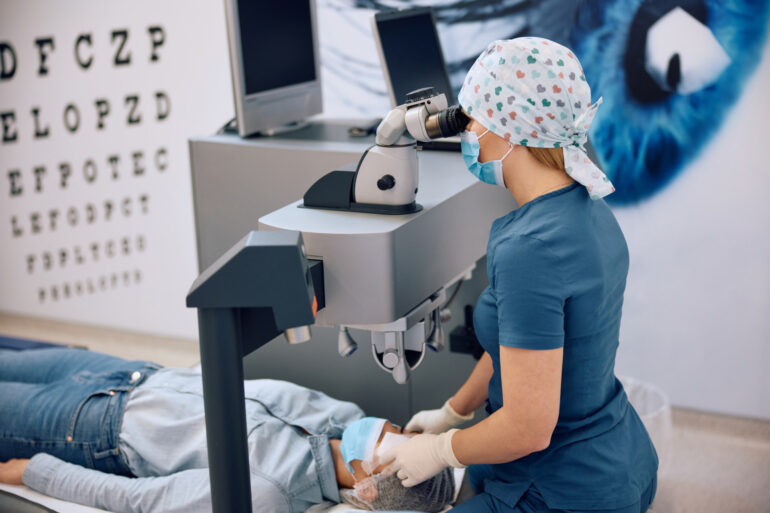
TransPRK and LASIK are both laser vision correction procedures that reshape the cornea to correct refractive error. However, they reach that goal through different surgical routes, one working on the corneal surface and the other beneath a thin flap.
As a result, surgical technique, recovery timeline, discomfort, and suitability all differ between them. Those differences guide whether TransPRK or LASIK is appropriate for your eyes.
How TransPRK and LASIK Work
TransPRK and LASIK both use laser energy to reshape corneal tissue, yet they differ in how the surgeon reaches that tissue. In each case, the reshaped cornea brings light to a sharper focus on the retina. Understanding how each procedure works is the first step to determining whether TransPRK laser treatment or LASIK better matches your eyes.
TransPRK (Transepithelial Photorefractive Keratectomy
TransPRK is a surface ablation procedure where an excimer laser removes the cornea’s outer layer, the epithelium. The same laser then reshapes the underlying tissue in a single automated step, without manual scraping or flap creation.
Removing the epithelium with the laser alone, rather than with a blade or alcohol, is associated with lower epithelial trauma and a reduced risk of infection. The procedure treats myopia (short-sightedness) and astigmatism while preserving corneal structure. Once treatment is complete, the epithelium regenerates over several days, during which patients wear a protective bandage contact lens.
LASIK (Laser-Assisted In Situ Keratomileusis)
LASIK is a flap-based procedure. To access the cornea, a femtosecond laser first creates a thin, hinged corneal flap (a lid-like layer of the outer cornea). The surgeon then lifts this flap, and an excimer laser reshapes the tissue beneath before the flap is repositioned.
LASIK corrects myopia, hyperopia (long-sightedness), and astigmatism. Most patients reach functional vision within 24 hours, since the flap protects the treated surface and speeds healing. The intact flap helps enable the quicker recovery that many patients associate with LASIK.
Key Differences Between TransPRK and LASIK
Both procedures correct refractive errors by reshaping the cornea. However, they differ in surgical technique, recovery timeline, and suitable patient profiles. Choosing between TransPRK vs LASIK depends on how these differences weigh against your circumstances.
| TransPRK | LASIK | |
|---|---|---|
| Surgical Technique | Surface ablation with laser epithelial removal | Corneal flap creation, then reshaping beneath |
| Flap or Incision | No flap, epithelium regenerates naturally | Corneal flap created and repositioned |
| Conditions Treated | Myopia and astigmatism | Myopia, hyperopia, and astigmatism |
| Recovery Timeline | Slower, roughly 3 to 7 days for epithelial healing | Faster, often functional vision within 24 hours |
| Discomfort Level | More noticeable during epithelial healing | Minimal after the first day |
| Flap-Related Risk | None | Small risk of flap complications |
| Suitable Candidates | Thin corneas, contact sport athletes, flap-free preference | Broader range, including hyperopia and patients who want faster recovery |
TransPRK vs LASIK: Factors to Consider When Choosing Between Procedures
Neither procedure is universally better, since each offers distinct advantages for different circumstances.
As such, the choice should follow a detailed eye examination at an eye clinic in Singapore, which will weigh your corneal anatomy, refractive error, lifestyle, and recovery preferences together.
1. Corneal Thickness and Structural Considerations
TransPRK may suit patients with thinner corneas, since it removes no tissue for a flap and preserves more corneal structure. In contrast, LASIK requires enough corneal thickness to create a flap safely and reshape the tissue beneath. This can rule it out for some borderline measurements.
2. Recovery Timeline and Visual Rehabilitation
In practice, the recovery time for LASIK surgery is typically faster, with most patients returning to routine activities within one to two days. Meanwhile, TransPRK recovery is more gradual, since the epithelium needs three to seven days to heal. Vision then settles over the following days, with clarity refining over several weeks.
For this reason, patients with time-sensitive work or travel commitments may weigh this difference carefully.
3. Lifestyle and Contact Sport Considerations
TransPRK creates no flap, which removes the risk of flap dislodgement from impact. This makes it a common choice for athletes in contact sports, combat disciplines, or roles with a higher chance of eye trauma.
By comparison, LASIK’s flap is generally stable once healed. However, it carries a small lifelong risk of dislodgement after significant trauma, which can likewise matter for certain occupations or sports.
4. Refractive Error Type and Treatment Range
TransPRK treats myopia and astigmatism through its surface-based reshaping. In comparison, LASIK addresses myopia, hyperopia, and astigmatism, which gives it a broader treatment range. It can also support presbyopia management through approaches such as monovision.
For age-related near-vision change, patients may consider presbyopia treatment with laser blended vision, which targets age-related loss of near focus.
5. Post-Operative Discomfort and Healing Experience
TransPRK usually involves more discomfort while the epithelium heals, including light sensitivity, watering, and a foreign body sensation. A protective contact lens and prescribed drops help manage this early phase. Most of this discomfort eases once the epithelium closes and the bandage lens is removed.
Conversely, LASIK patients generally feel minimal discomfort after the first day, with mild dryness or irritation that tends to settle within days.
Is TransPRK Better For You Than LASIK? Making an Informed Decision

The question of whether TransPRK is better than LASIK has no single answer. Neither procedure ranks above the other in every case. Surface ablation procedures, including PRK and TransPRK, suit some eyes, while flap-based LASIK suits others.
Suitability instead rests on corneal thickness, refractive error, and lifestyle rather than on either procedure being superior overall. A detailed assessment brings this into focus, taking into account corneal topography (a scan that maps the corneal surface), pachymetry (a measurement of corneal thickness), and refraction.
If you are comparing laser vision correction procedures, book an eye assessment at LSC Eye Clinic. Our team will guide you through the relevant tests and discuss whether TransPRK, LASIK, or another option suits your eyes, lifestyle, and goals.
Patients weighing astigmatism correction can also discuss astigmatism treatment options during consultation.
Citations & References:
- Transepithelial Photorefractive Keratectomy: An Analysis of the Solutions Offered by the Industry Nowadays. Available at: https://pmc.ncbi.nlm.nih.gov/articles/PMC12277988/
- LASIK Recovery Time: What You Need To Know. Cleveland Clinic. Available at: https://health.clevelandclinic.org/lasik-recovery-time
- Traumatic Corneal Flap Avulsion and Loss 13 Years After LASIK. Available at: https://www.sciencedirect.com/science/article/pii/S1319453418302996
Similar Articles