Timeout for Your Eyes: Presbyopia Tips and Treatment for Hassle-Free Pickleball After 40
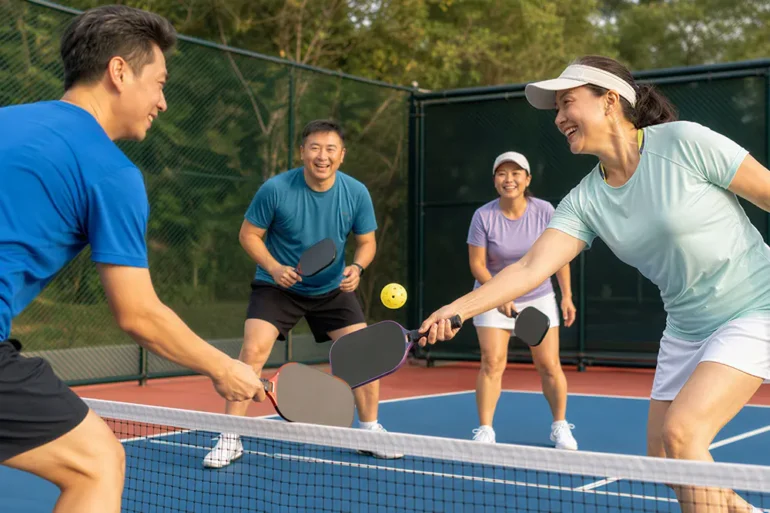
You already know something is going on with your eyes.
Maybe you read our last article, Fault Signs of Lao Hua (Presbyopia): 7 Moments Pickleball Players Over 40 Will Recognise, and nodded along to more than a few of those moments. Maybe a playing partner mentioned PRESBYOND to you between games. Maybe you’ve quietly searched for “presbyopia treatment” while waiting for a court and wondered if it was worth looking into.
Either way, you’re past the stage of wondering whether your near vision has changed. You know it has.
So this one is for you: the pickleball player in their 40s or 50s who wants hassle-free pickleball again and is starting to seriously think about presbyopia treatment.
We’ll share honest, practical tips for getting through long open-play sessions and evening games with less eye strain. Then we’ll explain why, for many people at this stage, those tips are really just a workaround, and what a more lasting presbyopia treatment actually looks like.
Why presbyopia (Lao Hua/老花) makes long pickleball sessions harder after 40
Before the tips, it helps to understand what is actually happening when your eyes feel wrecked after a long session on court.
Presbyopia, also known as Lao Hua (老花), happens when your eye’s natural lens stiffens and loses the flexibility it had in your 20s and 30s. Every time you switch focus, from a dink at the kitchen line to a lob heading for the baseline, from the ball to the scoreboard, or from the court to the booking app on your phone, your eyes have to work harder than they used to.
Do that for two hours of open play, add back-to-back games with barely a break, then throw in bright floodlights against a dark evening sky and a phone full of group chats. By the time you pack up your paddle, your eyes have been working overtime.
That fatigue is real. It’s not just tiredness from a long session. It’s your eyes telling you they’ve been struggling to keep up all night.
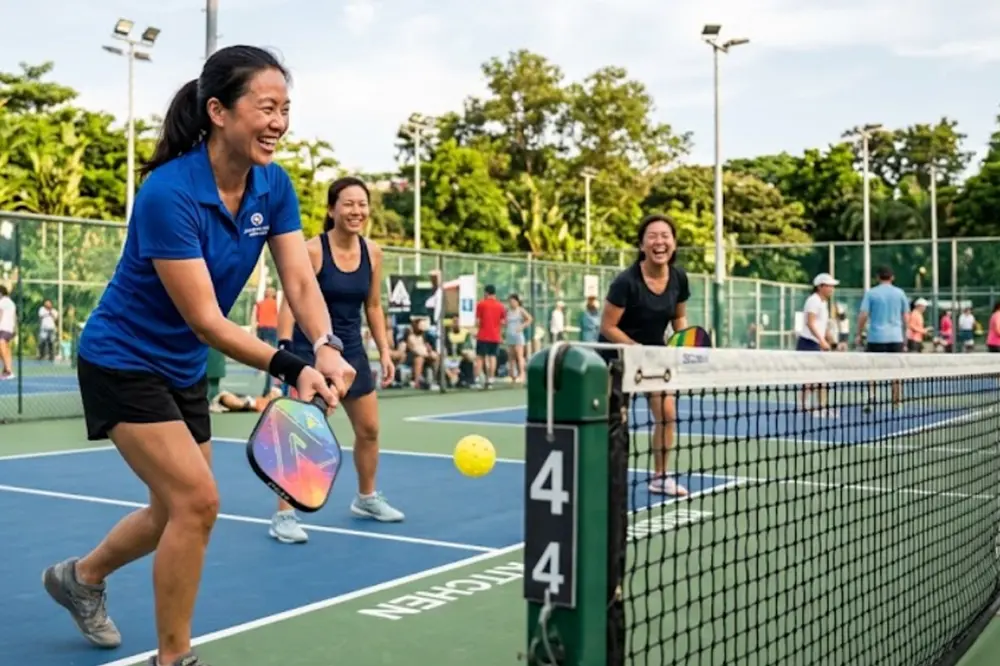
7 Tips for Hassle-Free Pickleball with Presbyopia
None of these take long, and most can be done before your next session even starts.
- Get your lighting and ball right for evening games
Floodlit courts create a strong contrast between bright lights and a dark sky, which forces your eyes to keep adjusting. Where you can, book courts with even, well-maintained lighting, and avoid looking directly into the lights when tracking a lob. A ball colour that stands out clearly against the court surface also makes it easier to pick up the ball over a long session.
- Follow the 20-20-20 rule between games
Every 20 minutes, look at something at least 20 feet away for 20 seconds. The break between games is a natural pause, so use it. Instead of heading straight for your phone, look across to the far courts and let your eyes rest from near-focus effort. It genuinely helps reset the fatigue that builds across a long session.
- Keep your phone at a comfortable distance and increase the font size
Stop fighting your arm. If your phone needs to be further away to be readable, let it be further away. Then go into your phone settings before your next session and increase your default font size. Court booking apps and group chats are full of small text, which is one of the biggest causes of eye strain for people with presbyopia.
- Protect your eyes from the sun and wind down your screen at night
For daytime games outdoors, sports sunglasses with UV protection cut glare and reduce squinting. After evening games, turn on your phone night mode or warm display setting before you scroll through the chat. Blue light doesn’t cause presbyopia, but it does add to visual fatigue during long evening screen sessions.
- Blink more, seriously
When you’re focused on tracking a fast ball or reading a screen, you blink far less than you should. Blinking keeps your eyes lubricated and reduces the dry, gritty feeling that often follows a long session, especially in Singapore’s heat or on breezy outdoor courts. If you wear contact lenses, this matters even more. Keep lubricating eye drops in your paddle bag and use them during breaks.
- Don’t play in reading glasses, but don’t keep taking them on and off either
Reading glasses are made for near tasks, so they blur your view of the ball at a distance and can slide around during a rally. Leave them off on court. Off court, wear them consistently for the booking app, the group chat or the menu at the post-game makan. Constantly switching between glasses on, glasses off and squinting without actually makes eye fatigue worse over an evening.
- Use spectacle hooks so your glasses stay put
Spectacle hooks are small silicone grips that slip onto the arms of your glasses and hook behind your ears. They stop your specs from sliding down a sweaty nose or falling off when you bend for a low ball, which makes them handy between games and players who wear prescription glasses on court. They won’t fix your near vision, but they take one more hassle out of your session.
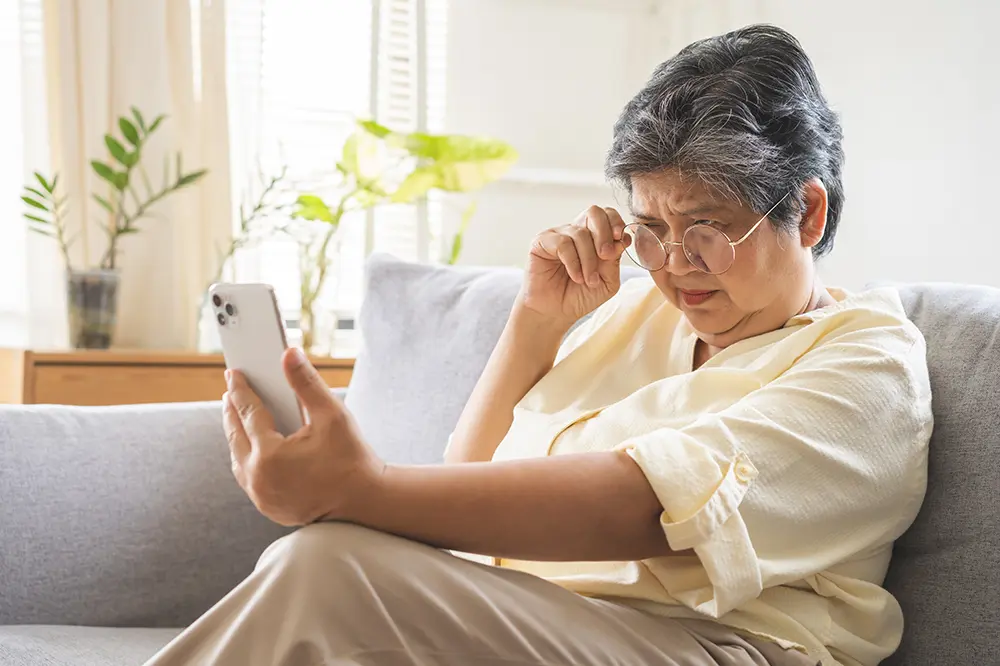
Why these tips are not a presbyopia treatment
Here’s the thing about everything above: it works. These habits will genuinely reduce how tired your eyes feel by the end of a long session.
But they are management strategies. They work around presbyopia rather than treat it.
At some point, especially if you’re in your 40s or early 50s and your presbyopia has been progressing, the workarounds start to feel like a lot of effort. The spectacle hook you forgot to slip on. The font size that keeps needing to go bigger. The evenings that end with your eyes feeling like they’ve played an extra game, even when you’ve done everything right.
If you’re at that point, or approaching it, it’s worth knowing what an actual presbyopia treatment looks like.
PRESBYOND: A Presbyopia Treatment for people seriously considering it
You may have already heard of ZEISS PRESBYOND Laser Blended Vision. If you’re in the consideration stage, here’s what’s worth understanding beyond the basics.
It is designed specifically for people like you
ZEISS PRESBYOND was developed for patients in their 40s and 50s who have presbyopia and want to reduce their dependence on reading glasses. It is not a variation of standard myopia LASIK. It is a separate treatment with a different goal: giving you a functional range of vision that covers near, intermediate, and far distances.
How “blended vision” works
The treatment adjusts each eye to a slightly different focal point, with one eye slightly more optimised for distance and the other for near, plus an overlapping “blended” zone in between. Your brain learns to combine the input from both eyes into a seamless range of vision. For most suitable patients, this means being able to read the group chat, track a lob to the baseline, and read the chat again without reaching for glasses.
Most suitable patients see results across all three distances
Clinical data for PRESBYOND shows that the majority of suitable patients achieve functional vision at near, intermediate, and far distances after the procedure. However, results do vary; suitability depends on your individual eye profile, and it is important to have realistic expectations going into any consultation.
The consultation is where you get your real answers
No article can tell you whether PRESBYOND is the right presbyopia treatment for you. That requires a proper eye assessment, including corneal mapping, prescription measurement, tear film evaluation, and a conversation with a qualified surgeon about your visual needs and lifestyle.
What a good consultation gives you is clarity. You will know whether you are a candidate. You will understand what outcomes are realistic for your specific eyes. And you will be able to make an informed decision from there, without pressure or guesswork.

What to ask at your presbyopia treatment consultation?
If you’re planning to book, or already have one scheduled, here are questions worth bringing with you.
- About suitability:
- Am I a suitable candidate for PRESBYOND based on my corneal profile and prescription?
- Are there any factors in my eye health that would affect my candidacy?
- About the procedure:
- How does PRESBYOND differ from the standard LASIK I may have heard about?
- What does the blended vision adjustment actually feel like in the first few weeks?
- How long does the adaptation period typically take?
- How soon can I get back on court after the procedure?
- About outcomes:
- What range of vision can I realistically expect for someone with my prescription?
- Will I still need glasses for any activities after the procedure?
- How does presbyopia progression after the procedure affect long-term results?
- About the clinic and surgeon:
- How many PRESBYOND procedures has your clinic performed?
- What technology are you using for the laser treatment?
These questions will not just help you get good information. They will also help you gauge whether the clinic is giving you honest, personalised answers or a rehearsed pitch.
Presbyopia Treatment FAQs for Pickleball Players
What are the treatment options for presbyopia?
Common options include reading glasses, progressive or multifocal glasses, multifocal contact lenses, and laser vision correction such as ZEISS PRESBYOND Laser Blended Vision. Lens-based procedures may also be considered for some patients. The right presbyopia treatment depends on your age, prescription, eye health and lifestyle, so a proper eye assessment comes first.
Is lao hua (老花) the same as presbyopia?
Yes. Lao Hua (老花) is the common local term for presbyopia, the age-related loss of near focusing ability that usually becomes noticeable in your 40s.
Can I play pickleball with reading glasses?
It’s not ideal. Reading glasses are designed for near vision, so they blur your view of the ball at a distance and can slip during fast rallies. Most players with presbyopia leave them off on court and use them for reading between games.
What is a spec hook, and does it help with presbyopia?
A spec hook is a small clip or magnetic holder that lets you hang your glasses on your shirt, cap, or bag. It keeps your reading glasses within reach for hassle-free pickleball, but it is a convenience, not a treatment. It does not change your near vision.
How soon can I play pickleball after PRESBYOND?
Recovery varies from person to person. Your surgeon will advise when it is safe to return to sport based on your healing, so ask about this at your consultation.
The bottom line for your next session
The game is played to 11. Your eyes will be with you for the rest of your life.
The tips in this article will help you enjoy more hassle-free pickleball. But if you’ve been putting off a proper conversation about presbyopia treatment because it never felt like the right time, consider this your timeout call.
Book a consultation. Ask about PRESBYOND. Get the real picture about your options.
You’ve given enough time to squinting, reaching for glasses and making do. Your eyes have earned a proper assessment.
This article is for general informational purposes only and does not constitute medical advice. Please consult Dr Daphne Han @ LSC Eye Clinic for a personalised assessment.
Similar Articles